Why Facom Remains a Benchmark for Professional Mechanics
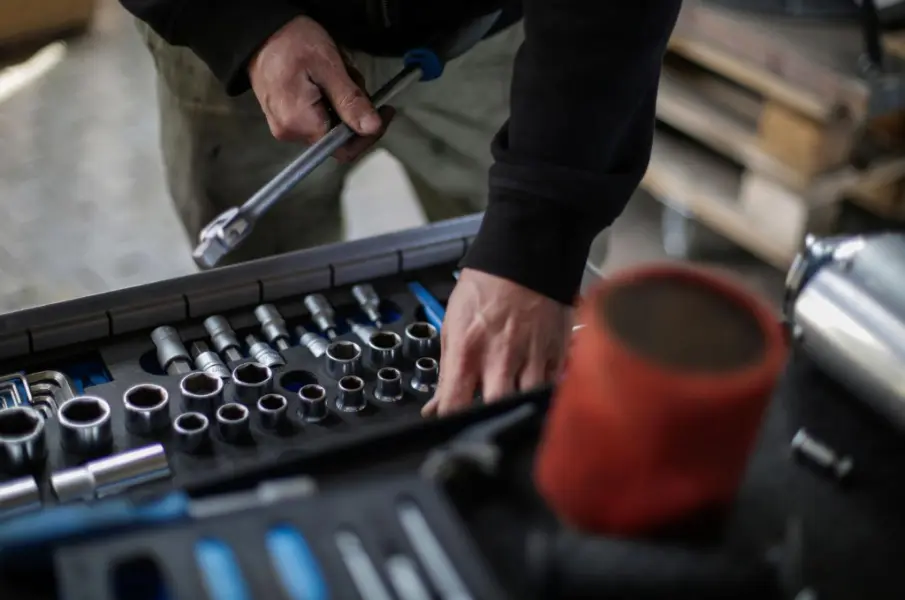
A century of precision engineering, relentless innovation, and uncompromising quality has made Facom the name that professional mechanics trust above all others.
Introduction: The Gold Standard in a Workshop
Walk into almost any professional automotive workshop, truck repair facility, or motorsport pit garage in Europe, and you will almost certainly find a distinctive red-and-black Facom tool chest. It is not there by accident. For over a hundred years, Facom has occupied a singular position in the professional tools market — a brand that working mechanics do not simply use, but genuinely trust with their livelihoods.
In an era where the tools market has become flooded with budget imports and disposable products, Facom's continued dominance as the brand of choice for trained professionals is a remarkable achievement. Understanding why requires looking at the company's history, its engineering philosophy, the depth and intelligence of its product range, and the way it has evolved to meet the changing demands of modern vehicle technology — without ever compromising the foundational principles that built its reputation.
A Heritage Rooted in Professional Demand
Facom was founded in France in 1918, in the aftermath of the First World War, at a time when the automobile was rapidly transforming from a novelty into a practical machine that industry and commerce depended upon. The company's name — Fabrication d'Appareils de Contrôle et de Mesure — reflected its origins in precision measurement and control instruments. From the very beginning, Facom was oriented not toward the amateur or hobbyist, but toward the professional who needed tools they could rely upon absolutely.
This professional orientation shaped everything that followed. While many tool manufacturers have drifted between consumer and trade markets over the decades, Facom has remained resolutely focused on the mechanic who earns their living with their tools. That consistency of purpose is itself a form of quality assurance, because a brand that depends on professionals for its survival cannot afford to let standards slip.
The company became part of the Stanley Black & Decker group in 2002 through the acquisition of the French parent company Facom SA, but has continued to operate with its own identity, engineering team, and product development philosophy. Its French manufacturing heritage and commitment to the European professional market have remained central to the brand's identity and its appeal.
The Engineering Philosophy: No Compromise on Quality
The most important reason Facom tools remain a benchmark is simple: the tools are extraordinarily well made. This is not a marketing claim — it is a demonstrable reality that any mechanic who has used a Facom ratchet, spanner, or socket set alongside cheaper alternatives will confirm within minutes.
Steel Specification and Heat Treatment
Facom's hand tools are manufactured from specially selected chrome-vanadium steel alloys, with each tool category engineered to specific hardness and toughness profiles. The balance between hardness and toughness is critical: a tool that is too hard will be brittle and prone to catastrophic failure under shock loads; a tool that is too soft will deform under sustained load. Facom's metallurgical specifications are developed to achieve the optimum balance for each application.
The heat treatment processes applied to Facom's sockets, spanners, and drive tools are carefully controlled to ensure consistent properties throughout each batch. This is not a trivial matter — inconsistent heat treatment is one of the most common causes of premature tool failure in lesser products, even those made from nominally adequate steel grades. Facom's manufacturing quality control ensures that every tool shipped from the factory meets its specification, not just a sample from each production run.
Forging and Forming
High-quality tool manufacture begins before machining — it begins with the forging process that shapes the raw material. Facom uses drop-forging techniques that align the grain structure of the steel with the geometry of the tool, producing components with significantly superior strength and fatigue resistance compared to tools made from bar stock that has simply been machined to shape.
The quality of Facom's forgings is immediately apparent in the finished tools: surfaces are smooth and consistent, edges are well defined, and there is none of the roughness or porosity that characterises inferior forgings. This is the result of investment in high-quality forging tooling and processes that many budget manufacturers are unwilling to make.
Finish and Corrosion Protection
Facom applies a multi-stage surface treatment process to its tools that provides both corrosion resistance and aesthetic quality. The chrome-plated finish on spanners and sockets is applied to precise thickness specifications, providing genuine corrosion protection rather than a thin cosmetic coating. The finish also reduces the tendency for oil and grease to adhere to tool surfaces, making cleaning easier and helping tools maintain their condition over years of hard use.
In specialist applications, Facom offers tools with phosphate or black oxide finishes that reduce light reflection — an important consideration in motorsport and precision workshop environments where glare can be a distraction.
The Ratchet: An Icon of Precision Engineering
If there is a single product that defines Facom's reputation for precision engineering, it is their ratchet mechanism. The Facom ratchet has become legendary among professional mechanics for a combination of qualities that are difficult to achieve simultaneously: fine tooth count, smooth action, high torque capacity, and long service life.
Fine Tooth Count and Arc Swing
Facom's premium ratchets feature tooth counts of 72 teeth or more, producing an arc swing — the minimum angle of rotation needed to advance the ratchet — of just 5 degrees. In practice, this means that in very confined spaces where a full swing of the handle is impossible, the mechanic can still make progress with tiny, rocking movements. This is not a marginal advantage; in automotive workshop conditions, where engines and components are densely packaged, a fine-tooth ratchet can make the difference between a job being achievable and being impossible without partial disassembly.
Facom's J series ratchets in particular have earned an almost cult following among European mechanics for their action and durability. The engagement is positive and reliable, the reverse mechanism is precise, and the overall feel of the tool communicates a quality that is apparent the moment it is picked up.
Durability Under Load
Professional mechanics work ratchets hard. Unlike the home user who might tighten a few bolts once a year, a workshop mechanic may cycle a ratchet thousands of times a day. Facom's ratchet mechanisms are designed and tested for this kind of sustained, intensive use. The pawl and tooth geometry are engineered to distribute load evenly, reducing wear rates and extending service life.
The rebuild-ability of Facom ratchets is another professional advantage. Rather than being disposable items, Facom ratchets can be serviced with replacement pawl and spring kits, allowing a worn mechanism to be restored to factory specification at modest cost. This repairability is consistent with professional workshop economics, where a quality tool that can be maintained over many years represents far better value than a cheaper tool that must be replaced.
The Spanner Range: Depth, Intelligence, and Ergonomics
Facom's spanner range is one of the most comprehensive available from any single manufacturer, covering not just the obvious open-ended, ring, and combination spanners in metric and AF sizes, but an enormous variety of specialist configurations that address specific workshop challenges.
OGV Profile: A Technical Advance
One of Facom's most significant technical contributions to professional hand tools is the OGV (Optimised Geometry design in combination wrenches) profile, applied to the ring ends of combination and ring spanners. The OGV profile moves contact with the fastener away from the corners — which is where cheaper spanners grip and where damage to bolt heads is caused — and onto the flat faces of the hexagon, distributing load over a much larger area.
The practical result is a dramatic reduction in fastener damage, particularly important when working on vehicles where fasteners are corroded or have already suffered damage from previous work. The OGV profile also allows more torque to be applied to a fastener without risk of the spanner slipping or rounding the head, a critical advantage when breaking loose seized components. This is not a marketing feature but a genuine engineering advance that working mechanics notice and value immediately.
Slim Profiles and Offset Designs
Facom understands that professional mechanics regularly work in spaces where standard tools cannot reach, and the spanner range reflects this with an unusually comprehensive selection of slim-profile, crows-foot, and specially offset designs. The ability to source a specialist spanner from a single, trusted supplier — rather than having to resort to fabricated or improvised tools — is a significant professional advantage.
The offset ring spanners, in particular, are examples of thoughtful design: by tilting the ring relative to the handle at a carefully calculated angle, the mechanic can apply torque to a fastener that is recessed behind surrounding components, without the handle fouling on adjacent bodywork or pipework.
Handle Ergonomics
Professional use demands tools that can be gripped and controlled securely even with oil or coolant on gloved hands. Facom's spanner handles are shaped to maximise grip security and to allow maximum torque to be applied without hand fatigue. The weight distribution is considered as part of the design process, not as an afterthought, resulting in tools that feel balanced and natural in use.
The Socket Range: Systematic Completeness
A professional mechanic's socket set is the foundation of the entire toolkit, and Facom's socket range reflects an understanding of professional requirements that goes far beyond simply offering sockets in standard sizes.
Drive System Completeness
Facom offers a complete, systematic range across all common drive sizes — 1/4 inch, 3/8 inch, 1/2 inch, 3/4 inch, and 1 inch — with consistency of quality, finish, and design language across all drive families. This systematic completeness means that a mechanic who standardises on Facom can source any socket, extension, adaptor, universal joint, or torque tool they need from a single supplier, with confidence that all components will interface correctly and meet the same quality standard.
The deep sockets, impact sockets, bi-hex (12-point) sockets, and specialist socket configurations — including those for specific fastener types found on European vehicles — are all available within the Facom range, minimising the need to compromise with inferior products for specialist applications.
Impact-Ready Design
The growth of air-powered and electric impact wrenches in professional workshops has created specific demands for sockets capable of withstanding the shock loading that impact tools impose. Facom's impact socket range uses a different steel specification and heat treatment from standard sockets — optimised for toughness rather than hardness — and a distinctive black phosphate finish that both identifies them as impact-rated and provides appropriate corrosion protection.
The wall thickness of Facom impact sockets is calculated to provide the strength required for impact use while keeping external dimensions as compact as possible, since accessibility in confined spaces remains important even when using an impact wrench.
Torque Tools: Precision Where It Matters Most
Modern vehicles depend on correct fastener torque to an extent that was unimaginable a generation ago. Cylinder head bolts are torqued using yield or angle methods rather than simple torque values. Wheel bolts must be tightened to precise specifications to avoid brake disc distortion. Suspension components are specified with torques that are critical to ride quality and safety. In this environment, a mechanic's torque wrench is one of the most important tools in the workshop — and quality matters enormously.
Facom's Torque Wrench Range
Facom's torque wrench range spans from small, precise instruments for work on electronics and trim components right through to heavy-duty tools for commercial vehicle wheel nuts and industrial fasteners. The design of each model reflects its intended application: compact, ergonomic instruments for frequent use in tight spaces; full-size, clearly readable click wrenches for general workshop use; electronic instruments with digital displays for applications requiring the highest accuracy and traceability.
The accuracy specifications of Facom torque wrenches are certified to current international standards, and the tools are designed to maintain their calibration over extended periods of normal professional use. This is not a trivial achievement: the internal mechanism of a click-type torque wrench must remain consistent across thousands of cycles and must not be affected by reasonable variation in temperature or storage conditions.
Calibration and Traceability
For workshops operating quality management systems — increasingly common in dealer networks and specialist garages — the ability to certify that torque tools are in calibration is essential. Facom supports this requirement with calibration services and documentation, and the engineering quality of the tools themselves means that calibration intervals can be maintained without unexpected drift.
Diagnostic and Electronic Tools
The modern vehicle is fundamentally different from its predecessors in the extent to which electronic systems control and monitor mechanical functions. This transformation has required every aspect of workshop tooling to evolve, and Facom's response has been to develop a range of diagnostic and electronic tools that match the quality and professionalism of its mechanical tool range.
OBD Diagnostics
Facom's OBD (On-Board Diagnostics) reader range extends from simple fault code readers that allow a mechanic to identify and clear stored faults quickly, through to advanced diagnostic platforms capable of reading live data, performing actuator tests, and programming replacement components. The software is developed with professional workshop workflow in mind: it is fast, clear, and structured to support the kind of systematic fault diagnosis that distinguishes a professional from an amateur.
The integration between Facom's diagnostic software and their catalogue of technical information reflects an understanding that diagnosis and repair are inseparable processes — a mechanic who can identify a fault code quickly still needs to know the correct procedure for addressing it.
Lighting and Inspection Tools
Facom's professional lighting range — including inspection lamps, workshop lights, and torches — reflects the same quality orientation as the mechanical tool range. The emphasis is on reliability, output quality, and durability in workshop conditions, where tools are dropped, exposed to fluids, and expected to work reliably at all times.
The Storage and Organisation Ecosystem
The professional mechanic's toolkit is only as useful as their ability to locate the right tool quickly and keep it in working condition. Facom's storage range — from individual tool pouches and rolls to complete workshop trolley systems — is designed to integrate with the tool range and support professional workshop organisation.
Workshop Trolleys and Cabinets
Facom's workshop trolley range is designed for the demands of intensive professional use. Drawer slides are smooth and load-rated to carry the weight of heavy tool collections. Locking mechanisms are robust and secure. Surfaces are resistant to oils, solvents, and mechanical damage. The physical dimensions are designed to hold Facom's tool range efficiently, with trays and inserts available to provide organised storage for specific tool families.
The design of Facom trolleys balances mobility with stability: they can be moved easily around a workshop, but are stable when positioned for use and resist tipping even when top drawers are open and loaded.
Tool Control and Accountability
In larger workshop environments, tool accountability — knowing which tools are in use and where — is an operational and safety requirement. Facom supports tool control systems with foam-inlay storage solutions that make it immediately visible when a tool has been removed from its place and not returned. This kind of systematic organisation reduces tool loss, speeds up housekeeping, and contributes to a professional workshop environment.
The Facom Lifetime Guarantee: Confidence Made Tangible
Perhaps the most powerful expression of Facom's confidence in its products is the lifetime guarantee that covers virtually its entire professional hand tool range. Under this guarantee, if a Facom hand tool fails through defect in materials or workmanship — at any point in its working life — Facom will replace it without charge.
This is not simply a marketing gesture. A lifetime guarantee on hand tools is only commercially sustainable if the product quality is genuinely high enough that warranty claims remain at low levels. A manufacturer offering this guarantee on low-quality tools would face ruinous replacement costs. The fact that Facom has been able to sustain this guarantee programme across its product range, over many years, is itself evidence of the quality standards the company maintains.
For the professional mechanic, the lifetime guarantee represents something beyond its commercial value: it is a statement of commitment from the manufacturer, an acknowledgement that the mechanic's livelihood depends on their tools, and a promise that Facom will stand behind its products. This relationship between manufacturer and professional user is central to Facom's brand identity and its enduring appeal.
Innovation Without Abandonment
One of the qualities that distinguishes truly excellent professional tool brands from merely adequate ones is the ability to innovate — to develop genuinely better products — without abandoning the reliability and consistency that professionals depend upon. Facom has demonstrated this balance over many decades.
New products and technologies are introduced through the Facom range when they represent genuine advances in capability or ergonomics, not simply to generate novelty. The OGV spanner profile, fine-tooth ratchet mechanisms, and electronic torque tools are examples of innovations that address real professional needs and have become established as standard references in their categories.
At the same time, Facom maintains backward compatibility across its range wherever possible, ensuring that mechanics who have invested in Facom tooling can add new products and adapt to new requirements without wholesale replacement of existing tools. The consistency of drive sizes, thread standards, and system design across decades of product development reflects a respect for the professional mechanic's investment and working practices.
Why Professionals Choose Facom: The View from the Workshop
The most persuasive argument for any professional tool brand is not found in specification sheets or marketing materials — it is found in the opinions of the professionals who use the tools every day. Among European mechanics, particularly those working on high-end vehicles, commercial transport, and motorsport, Facom consistently occupies the same position: the brand they choose when quality matters more than initial cost.
The reasons they give are consistent: the tools feel right in the hand; they don't fail at critical moments; the ratchets and sockets work smoothly even after years of hard use; and when something does eventually need replacing, the replacement arrives with the same quality as the original. These are the qualities that translate into professional confidence — the certainty that when you reach for a tool in the middle of a difficult job, it will do what you need it to do.
For a professional mechanic, that certainty has a real economic value. A tool failure at the wrong moment means a job overrunning, a vehicle being delayed, a customer being inconvenienced. The cost of investing in Facom quality, amortised over the working life of the tools, is invariably justified by the avoidance of these failures and the professional confidence that good tools provide.
Conclusion: A Century of Earned Trust
Facom's position as a benchmark for professional mechanics is not the result of marketing, heritage nostalgia, or brand loyalty for its own sake. It is the result of a century of consistently delivering tools that meet the real requirements of professional workshop use: precise, strong, durable, ergonomic, and backed by a manufacturer that stands behind its products unconditionally.
In a market where it is increasingly easy to produce tools that look professional at low cost, and where the difference between genuine quality and convincing appearance is not always apparent until a tool is put under load in a difficult situation, Facom's sustained commitment to genuine engineering quality represents something increasingly rare and valuable.
For the professional mechanic, the choice of Facom is ultimately a professional choice — a statement that their work deserves the best tools available, and that they trust their livelihood to a manufacturer that has earned that trust over more than a hundred years of dedicated service to the professional workshop.
Facom tools are available through professional tool distributors, automotive trade suppliers, and selected specialist retailers throughout the United Kingdom and Europe.
More to Read:


Previous Posts: